Containment Coating Get a Quote
Powered by ArmorThane

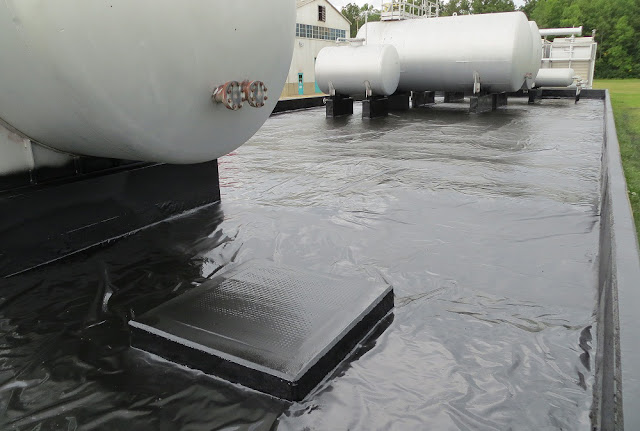
ArmorThane applicators install spray-applied containment linings.

Request a quote Find an applicator

Populars

Contact Form

Name

Email *

Message *

Search This Blog


Popular Post

Breaking News

Search

Popular Posts

Some Facts about Spray Coatings

Polyurea is phylliform by a reaction of diisocyanates and diamines, and it is one of the toughest inductive polymer materials. These are whatsoever of its attributes: Adenoidal powerfulness with a tensile posture higher than 5,000 psi and race power higher than 500 lbs/in 100% semisolid with no evaporable fertilizer compounds (VOC) Full hardness capability that's adjustable up to get D Echt chemical status Excellent excoriation condition Water-tight qualities The reaction between diisocyanate and diamine to spatiality polyurea can be really hurried. The exothermal turn in separate pushes the response to closing.  No complicated setup nor intolerant conditions are essential. This activity makes it practical to mix these two components together by calculated ratio and use the resulting combine onto a substrate. The diverse thickness of leathery polyurea coatings can be applied anywhere on various substrates. In drill, a peaky push dispersion equipment is misused bag o...

Mining Protective Coatings

Mining protective coatings are an integral part of mining operations today. Many companies with mine and mineral processing capabilities utilize mine coatings for their facilities. The main types of mine coatings are mine protective, mine spray on coatings, mine dust coatings, mine protection coatings and mine rescue coatings. All of these types of coatings to protect workers from falling debris, flying rocks and abrasion, chemicals and fire. These protective coatings also help reduce health risks to workers while they perform their job and also protect the environment. There are many benefits associated with using these protective coatings. One of the main benefits is that mine operators are able to work in more toxic environments knowing that the health of their employees and operators will not be affected by the toxic chemicals and materials that are present in the workplace. There are many cases where mine operators have exposed their bodies to mine-related chemicals and materials ...

POLYUREA COATINGS AND STORAGE CONTAINERS: WHAT YOU NEED TO KNOW

Storage tanks come in all shapes and sizes. They are used for a variety of purposes. Whatever their goal, one thing is sure. Protective coatings work to keep the essential commodity contained – and also field off all types of possible hindrances. It’s not enough to say that there are all types of storage tanks. When we talk about water storage tanks, it goes without saying that we don’t mean simple plastic gallon containers. Instead, we are referring to large capacity water towers that hold more than several hundred gallons of liquid. The reason the structures are tilted has everything to do with water pressure. No doubt there are some concerns when it comes to water storage tanks at high levels. For one, there are the apparent exposure considerations. Harsh weather can easily lead to corrosion and rust. Portable water is indispensable in emergency situations. Therefore, it’s critical to maintain the integrity of water towers. Protective coatings of polyurea base are a recogniz...

If You Want to Prevent Spills, POLYUREA Is What You Need!

A secondary spill containment system is most likely a necessary measure that your company has, especially within the oil and gas industries. These secondary spill containment systems and secondary containment liners protect against spillage, and in turn, those pesky EPA fines.  You may be surprised, but a secondary spill containment system will also help reduce, and in turn, your carbon footprint. The construction of a secondary containment system is relatively inexpensive, and you may want to consider using a single manufacturer. You will not be surprised, but the main consideration is probably going to be finding a manufacturer that offers a wide range of secondary containment systems. The primary objective of a secondary spill containment system will be to inhibit spillage in a harsh and unforgiving environment. In turn, the primary purpose of a secondary containment system will be to protect the environment and protect the company that has placed it to protect. If you are look...

When Secondary Containment Coatings Are Primary

It's a common occurrence to switch on the news as well as witness some form of hazardous chemical release right into the waterways, ground, or environment. These hazardous occasions have gathered a much better public worry over the past 25 years, and also social media and camera phones assist to keep them in the forefront. We made use of to only become aware of the bigger cases that caused the loss of life, an ecological influence on drinking water, or massive catastrophe to wild animals, such as when the Exxon Valdez ran ashore on Royal prince William Audio's Bligh Reef in 1989. Now we are hearing and seeing more such events-- even those of a smaller-scale. New policies and also regulations have actually enhanced the liability on the chemical customers and also transporters, specifically since they have to take every preventative measure to lessen as well as protect against the unexpected launch of harmful substances into the atmosphere. The security of life and also the...

A Guide to Chemical Spill Control

Every US company dealing with hazardous chemicals will require some kind of chemical spill protection in order to protect both staff members and the environment. Even if you're storing chemicals in very small quantities, it's still something you'll need to consider. To assist you choose the ideal spill control item, we've put together a quick guide to the most typical types readily available, with links to additional details so you can recognize the best level of protection for your organization. ( 1) Spill Trays If you're storing or handling little chemical containers, a spill tray is most likely the most efficient and affordable solution. Any liquid from containers placed on these bunded trays will be securely caught in the tray below, supplying immediate protection for spills, leakages, and leaks. Lots of trays are made from molded plastics such as polyethylene, which ensures they are both strong and resistant to deterioration, standing up to most common oils, ac...

Spill Containment Systems

In the case of an emergency, contaminated water can very suddenly lead to a more significant problem than the original cause. If sprinkler water percolates away uncontrollably and flows into the earth, it will be a hazard to both people and the environment. Many - sometimes tragic - examples have determined this in the past. ArmorThane's spill and containment barriers assure safety. The different models can be applied in front of and in the crack of doors and gates as well as in exterior of and inside concrete or steel bunds. One particular characteristic of ArmorThane products is the exclusive sealing technology which they introduced. It was modeled on a very flexible, highly chemical-resistant and flame-retardant type of foam. It pointed the way ahead for the entire market. They demand the utmost distinguished quality of the substances, manufacturing, and fitting – assisting both the safety of the people and the atmosphere. ArmorThane industrial ...

Become A Pro With An ArmorThane Containment Spray Rig

T he name Polyurea has long been synonymous with coatings and sealants that have excellent UV resistance, weatherability, chemical resistance, and thermal stability. ArmorThane's  polyurea coatings  are used extensively for  primary containment , such as chemical process and storage tanks, underground and aboveground fuel storage tanks, and concrete sumps. Because of their crack-bridging ability, they are also ideal for use in  secondary containment  concrete dikes. Polyurea delivers perfect solutions for even the most intricate  containment system projects .  TURNKEY CONTAINMENT SOLUTIONS ArmorThane provides  turnkey containment solutions . They specialize in the applications of heavy-duty  Polyurea spray-on liners . With over 30 years of experience in the business for corporate and municipal clients, they have certified polyurea applicators and state-of-the-art mobile capability, bringing spray-on lining technology to the most remote locati...

SECONDARY CONTAINMENT PROJECTS

  It is essential to have a secure and reliable secondary containment system to block and protect against spills and leaks contaminating groundwater and surrounding areas. ArmorThane rehabilitates and maintains every type of containment method on the market. A containment system can be open-air or sealed and can be made of plastics, concrete, metals, or other geotextile substances. ArmorThane has several polyurea and polyurethane products available for secondary containment systems, containment booms, and building containment berms. ArmorThane products form a leak-proof membrane when dry that will hold any liquid spill. The coating has the flexibility needed to weather ground shift and block cracking.  LEAK-PROOF COATING Creating a leak-proof coating or membrane is the most crucial step for successful secondary containment systems. Aging systems can fail due to freeze-thaw, intense dry heat, ground shift, and other environmental factors. Providentially, ArmorThane has various ...

Popular Posts

Polyurethane & Polyurea Coatings for Secondary Containment Coatings

  Are you searching for a reliable and durable secondary containment coating that will stand the test of time? Look no further – polyurethane and polyurea coatings could be the ideal solution! With superior corrosion protection, chemical resistance, superior durability, and long-term performance, these two types of coatings serve as an invaluable asset for industrial businesses requiring secondary containment solutions. Let's explore why these coatings make such great options for protecting your assets. Overview of Polyurethane and Polyurea Coatings for Secondary Containment Solutions When it comes to secondary containment solutions, polyurethane and polyurea coatings have become popular options in recent years. These coatings are highly versatile and can be applied to a variety of surfaces, including concrete, metal, and even wood. Not only do they offer excellent chemical resistance, but they also provide a durable barrier against abrasion and impact damage. One of the great thin...

SECONDARY CONTAINMENT PROJECTS

  It is essential to have a secure and reliable secondary containment system to block and protect against spills and leaks contaminating groundwater and surrounding areas. ArmorThane rehabilitates and maintains every type of containment method on the market. A containment system can be open-air or sealed and can be made of plastics, concrete, metals, or other geotextile substances. ArmorThane has several polyurea and polyurethane products available for secondary containment systems, containment booms, and building containment berms. ArmorThane products form a leak-proof membrane when dry that will hold any liquid spill. The coating has the flexibility needed to weather ground shift and block cracking.  LEAK-PROOF COATING Creating a leak-proof coating or membrane is the most crucial step for successful secondary containment systems. Aging systems can fail due to freeze-thaw, intense dry heat, ground shift, and other environmental factors. Providentially, ArmorThane has various ...

Spill Containment vs Secondary Containment

If you don’t have secondary containment, you need spill containment. If you do have secondary containment, you furthermore need spill containment. To understand the role of each type of containment and why you should have both, read on. Spill Containment The act of obstructing a spill is spill containment. When there’s a spill, your number one priority — after addressing safety concerns — is to prevent it from spreading. The sooner you contain the spill, the smaller the area that is affected. And that means less time spent cleaning up the spill. The most important thing to remember is that spill containment is part of the spill response. Spill response procedures often contain different types of spill containment to address multiple types of spills, including absorbent non-absorbent dikes, socks, and booms, or even drainage sumps created to collect spilled liquids. For example, spill containment for a ten-gallon oil spill in a warehouse with no floor drains might call for a...

A Guide to Chemical Spill Control

Every US company dealing with hazardous chemicals will require some kind of chemical spill protection in order to protect both staff members and the environment. Even if you're storing chemicals in very small quantities, it's still something you'll need to consider. To assist you choose the ideal spill control item, we've put together a quick guide to the most typical types readily available, with links to additional details so you can recognize the best level of protection for your organization. ( 1) Spill Trays If you're storing or handling little chemical containers, a spill tray is most likely the most efficient and affordable solution. Any liquid from containers placed on these bunded trays will be securely caught in the tray below, supplying immediate protection for spills, leakages, and leaks. Lots of trays are made from molded plastics such as polyethylene, which ensures they are both strong and resistant to deterioration, standing up to most common oils, ac...

Some Facts about Spray Coatings

Polyurea is phylliform by a reaction of diisocyanates and diamines, and it is one of the toughest inductive polymer materials. These are whatsoever of its attributes: Adenoidal powerfulness with a tensile posture higher than 5,000 psi and race power higher than 500 lbs/in 100% semisolid with no evaporable fertilizer compounds (VOC) Full hardness capability that's adjustable up to get D Echt chemical status Excellent excoriation condition Water-tight qualities The reaction between diisocyanate and diamine to spatiality polyurea can be really hurried. The exothermal turn in separate pushes the response to closing.  No complicated setup nor intolerant conditions are essential. This activity makes it practical to mix these two components together by calculated ratio and use the resulting combine onto a substrate. The diverse thickness of leathery polyurea coatings can be applied anywhere on various substrates. In drill, a peaky push dispersion equipment is misused bag o...

Become A Pro With An ArmorThane Containment Spray Rig

T he name Polyurea has long been synonymous with coatings and sealants that have excellent UV resistance, weatherability, chemical resistance, and thermal stability. ArmorThane's  polyurea coatings  are used extensively for  primary containment , such as chemical process and storage tanks, underground and aboveground fuel storage tanks, and concrete sumps. Because of their crack-bridging ability, they are also ideal for use in  secondary containment  concrete dikes. Polyurea delivers perfect solutions for even the most intricate  containment system projects .  TURNKEY CONTAINMENT SOLUTIONS ArmorThane provides  turnkey containment solutions . They specialize in the applications of heavy-duty  Polyurea spray-on liners . With over 30 years of experience in the business for corporate and municipal clients, they have certified polyurea applicators and state-of-the-art mobile capability, bringing spray-on lining technology to the most remote locati...

POLYUREA COATINGS AND STORAGE CONTAINERS: WHAT YOU NEED TO KNOW

Storage tanks come in all shapes and sizes. They are used for a variety of purposes. Whatever their goal, one thing is sure. Protective coatings work to keep the essential commodity contained – and also field off all types of possible hindrances. It’s not enough to say that there are all types of storage tanks. When we talk about water storage tanks, it goes without saying that we don’t mean simple plastic gallon containers. Instead, we are referring to large capacity water towers that hold more than several hundred gallons of liquid. The reason the structures are tilted has everything to do with water pressure. No doubt there are some concerns when it comes to water storage tanks at high levels. For one, there are the apparent exposure considerations. Harsh weather can easily lead to corrosion and rust. Portable water is indispensable in emergency situations. Therefore, it’s critical to maintain the integrity of water towers. Protective coatings of polyurea base are a recogniz...

Mining Protective Coatings

Mining protective coatings are an integral part of mining operations today. Many companies with mine and mineral processing capabilities utilize mine coatings for their facilities. The main types of mine coatings are mine protective, mine spray on coatings, mine dust coatings, mine protection coatings and mine rescue coatings. All of these types of coatings to protect workers from falling debris, flying rocks and abrasion, chemicals and fire. These protective coatings also help reduce health risks to workers while they perform their job and also protect the environment. There are many benefits associated with using these protective coatings. One of the main benefits is that mine operators are able to work in more toxic environments knowing that the health of their employees and operators will not be affected by the toxic chemicals and materials that are present in the workplace. There are many cases where mine operators have exposed their bodies to mine-related chemicals and materials ...

When Secondary Containment Coatings Are Primary

It's a common occurrence to switch on the news as well as witness some form of hazardous chemical release right into the waterways, ground, or environment. These hazardous occasions have gathered a much better public worry over the past 25 years, and also social media and camera phones assist to keep them in the forefront. We made use of to only become aware of the bigger cases that caused the loss of life, an ecological influence on drinking water, or massive catastrophe to wild animals, such as when the Exxon Valdez ran ashore on Royal prince William Audio's Bligh Reef in 1989. Now we are hearing and seeing more such events-- even those of a smaller-scale. New policies and also regulations have actually enhanced the liability on the chemical customers and also transporters, specifically since they have to take every preventative measure to lessen as well as protect against the unexpected launch of harmful substances into the atmosphere. The security of life and also the...
ArmorThane Polyurea secondary containment

Five Common Secondary Containment Misconceptions


Secondary containment is a basic engineering control to prevent a chemical or oil spill. There are some misconceptions, though, regarding secondary containment requirements. In terms of oil-based storage, these misconceptions can lead to inadequate containment capacity, significantly more containment capacity than needed, or simply not providing the right containment level when containers are grouped. 


The Environmental Protection Agency's Spill Prevention, Control and Countermeasure (SPCC) dictation does not specifically quantify the requirements for secondary containment; it simply stipulates that a facility needs to "provide a secondary means of containment for the entire capacity of the largest single container and sufficient freeboard to contain precipitation." The EPA determined that, for freeboard, the more appropriate method of secondary containment is a matter of engineering practice and did not quantify a percentage or specific storm event for engineers to calculate freeboard when completing secondary containment designs. The containment capacities provided in the table below are based on industry guidance and best practices. I have visited dozens of facilities and seen several misconceptions during facility walk-throughs over the years. Here are some of the common mistakes people make when selecting containment systems, and how to correct them: 


Overcoming These Five Common Secondary Containment Misconceptions 


Any pre-fabricated containment pallet has sufficient secondary containment for a 55-gallon drum. 

Often times, these pre-fabricated containment pallets have a spill volume of 20 to 30 gallons. Secondary containment needs to be at least the volume of the container and sufficient freeboard1 for precipitation. For indoor storage, the industry norm is 110 percent of the container's capacity. For a single drum, that would be 66 gallons of containment capacity.


Each 55-gallon drum stored indoors needs to have its own 66-gallon capacity secondary containment pallet. 

While you can always go above and beyond what is required, you only need to size a secondary containment system to hold the single most comprehensive container plus freeboard for rain. Four 55-gallon drums stored together indoors on a single containment pallet would only need 66-gallons of containment volume.


An outdoor tank has sufficient secondary containment with a concrete containment system capable of containing 100 percent of the tank's capacity.

For outdoor containers, you have to account for precipitation in sizing your secondary containment setup. Unless a more rigorous local or state regulation presides, engineers typically use a rule of thumb for deciding appropriate outdoor containment capacity. The most common methods to provide freeboard for precipitation are either 125 percent of the container's volume OR the container's size plus volume that would be collected over the containment device's footprint during a 25-year, 24-hour storm event.


A facility can store multiple drums within a concrete containment structure where other equipment and containers are stored. 

While this may be a satisfactory practice, storing additional items within the secondary containment structure reduces its containment space. If the structure was designed with a minimum 110 percent containment capacity, storing extra items within the construction could reduce the containment capacity below the needed amount. 


A facility has sufficient containment if a berm is around the entire oil storage area on a sloped ground. 

For a sloped floor, determining the actual containment capacity is crucial. If the height of the berm does not account for the slope, the secondary containment system's capacity may be much smaller than you think. A large portion of the containment volume can be wasted due to the slope on the floor. Also, maintaining the curb/berm elevation is critical to maximizing the containment system's capacity. 

Powered by ArmorThane

Talk to an applicator

Need a dike, pit or berm lined? Tell ArmorThane what you store and the size of the area, and a trained applicator will follow up with a quote.

Post a Comment

0 Comments

Get a Quote